Published by The i Paper (13th July, 2026)
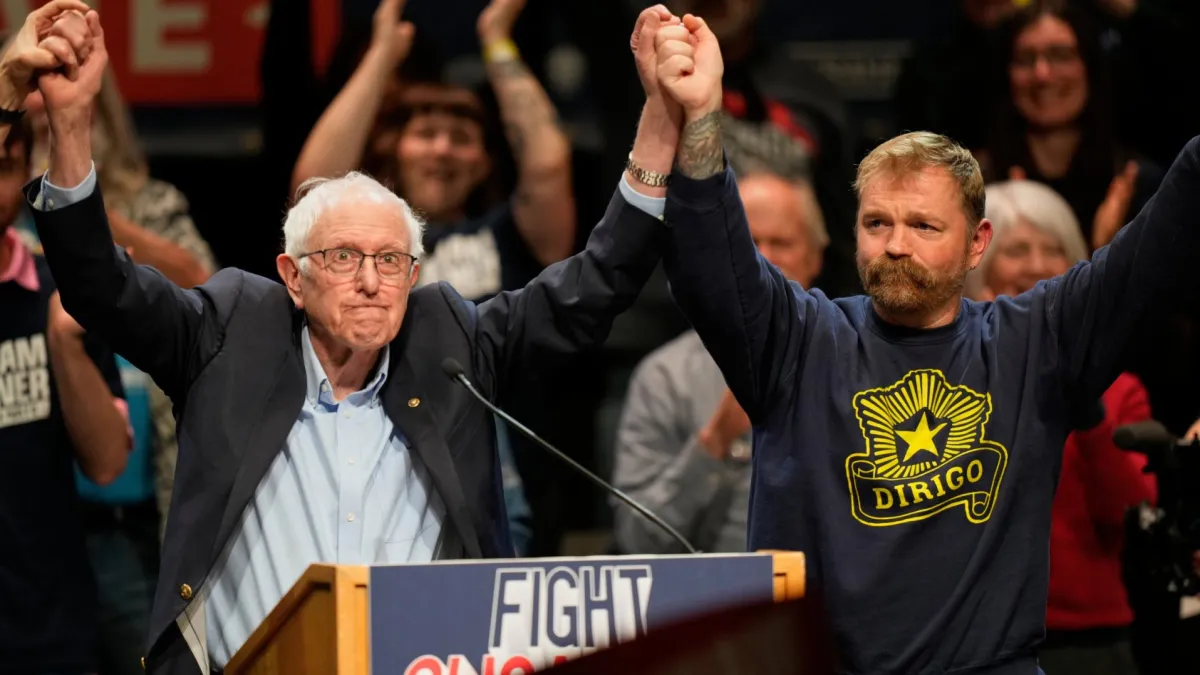
Graham Platner was seen as the potential saviour of the Democratic Party, a left-wing populist who cut through to voters in this turbulent age of Donald Trumps. Here was their working-class hero straight out of central casting, a marine who had fought in Iraq and Afghanistan before returning home to Maine to work as an oyster farmer. He spoke passionately about the failings of American foreign policy and thrilled crowds with promises to restrain the rich, shackle corporations and defend unions. “If fascists and bigots hate me, then I welcome that,” he declared, warning the US President and “all of his depraved billionaire friends” that he was coming for them.
Already his backers were touting plain-talking Platner as the perfect Democratic presidential candidate for 2028, even before voters had determined if he could oust Maine’s veteran Republican Senator Susan Collins in November’s mid-terms. He shot to national stardom after announcing his candidature in a slick video that went viral, then crushed the party establishment in June’s primary contest. He was seen as the quintessential small-town man embodying struggles of blue-collar America while embracing the anger and mistrust felt by many citizens towards Washington. “I’m a working-class guy that lives a working-class life,” he insisted. “There’s an authenticity there that most other politicians just can’t provide because it’s inauthentic for them.”
But like so many populists on both political flanks, he was a fake. His family background was privileged, he was educated privately and his main source of income was tax-free disability benefits rather than oysters; indeed, it was reported their main buyer was his mother’s restaurant. His campaign was plagued by scandals that should have sunk him ranging from a Nazi skull and cross bones symbol tattooed on his chest and calling police “bastards” through to homophobic and racist online slurs. His wife warned that he exchanged sex texts with multiple women early in his marriage, while a former partner alleged he was aggressive, fantasied about rape and took off condoms during sex without consent.
Platner strongly rejects all the allegations against him. He claimed ignorance for getting the tattoo as a drunken marine – denying he called it “my Totenkopf” as reported – and blamed his undiagnosed post-traumatic stress disorder for misdeeds. He was finally forced to stand aside on Friday after being accused of rape by a former girlfriend. He denies it, claiming that “a corporate media system and the political establishment got to act as judge, jury, and executioner”.
Yet, this marks the tawdry end to an insurgent campaign that began almost a year earlier with that video showing him farming oysters, chopping wood and talking about “hardscrabble” folks in his coastal state. “I’m not afraid to name an enemy. And the enemy is the oligarchy. It’s the billionaires who pay for it, and the politicians who sell us out.”
The video grabbed 2.5 million views within 24 hours and raised $1m (£0.75m) in barely a week. Within a fortnight, his candidature won backing from the left’s long-standing icon Bernie Sanders, hailing “a proud member of America’s working class” for “building a movement strong enough to take on the oligarchy”. Other key figures on the progressive and democratic socialist left hastily followed suit to support this gruff tribune of the people who had emerged seemingly from the grass roots. His surging support, energetic campaigning and compelling rhetoric forced 77-year-old state Governor Janet Mills – pick of the party’s bumbling leadership – to stand down.
Now, those who endorsed this solipsistic grifter are frantically back-pedalling. There is a backlash against the trio of young leftist consultants who curated his campaign and its implosion highlights the chronic divisions plaguing the party as it struggles to fight back against the Maga crowd. The Democrats have just a fortnight to find a new candidate in this crucial Senate contest, a battle with national and global repercussions since Maine – which voted for Kamala Harris in the 2024 presidential election – is a central plank in their fight to regain control of Congress and restrain Trump’s appalling regime.
This saga offers lessons reaching far beyond the United States. It shows again how populists try to manufacture “authenticity” to dupe voters – in this case, creating a character who was almost a caricature of what Ivy League consultants imagined should appeal to working-class voters. Such was their enthusiasm for Platner’s story that these ideologues failed to carry out proper vetting, just as we have seen again and again with Britain’s populists on both left and right – most recently with the sexist plumber picked by Reform UK to fight Andy Burnham in last month’s Makerfield by-election. Meanwhile, the shredding of artfully contrived authenticity helps explain Nigel Farage’s fury when quizzed over his £5m gift from a crypto billionaire fan and five mortgage-free properties.
Then there is the corrosive nature of blinkered tribalism. So avowedly progressive supporters and liberal journalists brushed aside the same sort of flaws, bigotry and misogyny that led (correctly) to the lambasting of both Trump and key members of his dismal team. Again, we have seen parallels in Britain with the hard left over antisemitism. Behind this lies the intense factional divisions that torment parties on the liberal-left struggling to respond to a populist reshaping of politics in democracies, torn between radicals – pushing failed policies such as wealth taxes that drive away wealth creators – and moderate party leaderships who look so inert and ill-equipped for politics in this disruptive era.
The Platner farce illustrates the challenges that confront our incoming Labour prime minister as much as the flailing Democratic leadership. After all, as David Axelrod – the strategist who orchestrated Barack Obama’s campaigns – has rightly stated, this candidate was clearly deeply flawed but still struck a chord with many voters who feel politics is failing them. And this is why they fall so readily for charlatans on both left and right who push phoney and simplistic populism – from Maine through to places such as Maidstone, Mansfield and even Burnham’s native terrain of Merseyside.