Published by The Daily Mail (27th June, 2026)
Scott Walker loved to escape the cold and dark Januarys of his native Inverness in search of winter sun – and as a self-employed painter and decorator, he could take the entire month off if it suited.
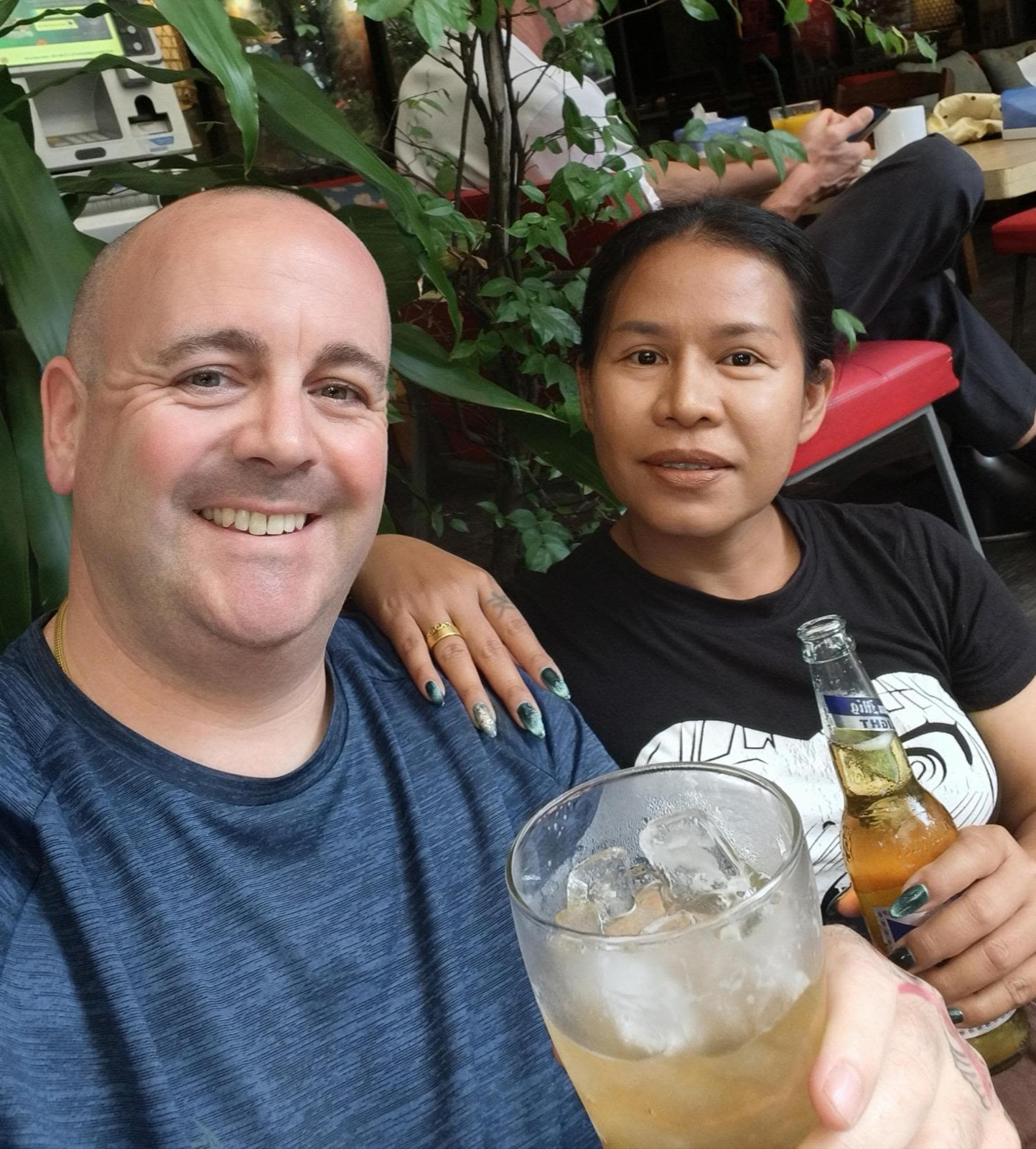
For many years, he went to Tenerife in the Canary Islands. Then he tried Thailand, falling in love first with ‘the land of smiles’ and then with a local woman, who spoke excellent English after working in the nail salon at a luxury hotel.
Now the couple are married – and 43-year-old Scott lives in a tiny rural community, surrounded by fields of corn, rice and sweet potato, close to the Cambodian border. His two-bedroom home in Scotland is rented out.
When not helping out his wife Jaa in her small grocery store or opening up the launderette they have established together, Scott is free to spend the day as he wishes.
He says he was driven from Britain by three key issues: the imposition of Covid rules that shut down his job and demonstrated the frightening power of government; the skyrocketing cost of living that made daily life a growing struggle; and failing to get a visa for his wife to visit Scotland despite the numbers of illegal migrants arriving in Britain.
He adds that he likes how his wife adopts a ‘traditional’ female role.
‘I don’t want to sound sexist, but she’s more caring. Women here are more old-fashioned, more feminine.
‘Women in the West are so demanding. One friend comes out for two weeks of fun. He has no interest in dating local Inverness women. They give nothing and expect everything. They play games.’
Scott admits that he would probably be classed as a ‘Passport Bro’ – the social media movement that encourages discontented Western men to travel to Asia and Latin America in search of easier dating prospects and potential wives or partners who embrace ‘traditional’ roles.
This controversial online trend – an offshoot of the toxic manosphere that promotes predatory seduction tactics alongside hyper-masculinity, misogyny and anti-feminism – is a digital twist in reverse on the phenomenon of so-called ‘mail-order brides’ whereby women actively seek marriage with men from more affluent nations.
The videos on TikTok and Instagram promoting the passport bro lifestyle often portray foreign women as deferential, glamorous and grateful for small gifts – to the fury of female critics who brand the men ‘losers’ at love fleeing abroad and exploiting people from impoverished countries.
One prominent passport bro in Thailand shows his girlfriend clipping his nails and putting toothpaste on his toothbrush for him, bragging that ‘it feels good’ to be a ‘traditional man’ while claiming most Thai women offer this ‘soft, feminine energy’.
Online forums swap dating tips and debate the countries best for finding compliant women. ‘Hey, for every man out there I suggest you marry overseas women and become a passport bro,’ reads a typical recent post on Reddit, branding Western women greedy and vain.
Much of this content is similarly angry, sexist or effectively promoting sex tourism – leading the writer and social scientist Katie Jagielnicka to argue that such pursuit of ‘traditional’ women in poorer countries reveals ‘the ugly truth about Western men’.
David White – a 40-year-old web developer and digital marketeer from Las Vegas whom I met in a Bangkok shopping mall while he was renewing his passport – typifies this trend of Western libertines travelling the world for fun and sex.
‘I have filled up three passports,’ he told me. ‘The moment you start making money on the internet you realise you can live anywhere so it’s natural to think: why don’t I go to another place where things are cheaper and other aspects of life are better?’
White told me that over the past decade he had lived in almost every Asian nation, Brazil and Colombia – and claimed to have dated hundreds of women in these countries, getting out his phone to show me selfies with groups of some of them.
‘I am a huge playboy,’ he said. ‘Some people make the passport bro movement look bad – they argue they’re losers back home, sexual refugees. But it’s totally justified. What is my reward for dating in places like the US where many women are obese?
‘Men on average are attracted to women who are physically attractive, aged 19 to 30 and not fat. Going to places where it is easier to achieve your goal is not bad, it is smart. Men are shamed for going to other countries for dating but in no other category are men shamed when travelling for better opportunities.’

White was accompanied by two women: Jess, his 22-year-old Filipino wife of two weeks, and a female assistant carrying the couple’s nine-month-old son. ‘I have no interest in marriage,’ he said. ‘I think it’s stupid and there are no benefits to the man. But in the eyes of society, I have no authority over my son if I’m not married.’
He added that he believes it is ‘embarrassing’ for any man to let their woman work so he gives his wife a $100-a-week allowance for any personal use, including support for her family, and tells her to focus on ‘being a mum, being a girl, being pretty’.
So, what does his wife think of such antediluvian views, which even this shameless American admits are inflammatory in today’s world? Jess tells me that after seeing lots of ‘creepy’ or ‘chubby’ older foreign men using money to lure younger girls in her native land, she had no interest in dating guys from abroad until she met White.
‘I met him at a time when he was living with three girls in an apartment. I wondered what was so attractive about this guy. There was no money involved. His aura was sexy, he had a bad boy vibe which I liked – before he went into dad mode,’ she said.
‘I have a traditional view of men. There are cultural differences – I understand local guys better. But Western guys are more manly. He’s very masculine – he leads the way, and I like that. If we go somewhere special, I want to be treated like a lady.’
Some critics claim such women are just seeking a passport to the West. But when I ask Jess about this, she says she will go wherever her husband decides is best for the family. ‘I’d prefer to be close to my family but I’m ok wherever he chooses.’
Kay Lekan, a women’s activist in Thailand who is researching transnational relationships, told me that often both sides in these partnerships are seeking a new life with local women possibly fleeing cheating partners or domestic abuse as well as poverty.
‘We should not deny the economic issue, but it is much more than that – it is about opportunity, new experiences, new lives, the impressions of white guys who seem to show more respect to their partners. There can be benefits for both people.’
Lekan added that Asian societies were changing fast – with Thai women’s growing independence shown by the fertility crisis. The nation, which last year registered its lowest number of newborns for 75 years, has among the world’s lowest birth rates.
‘If a passport bro comes looking for a submissive woman, he might not find her. But if you are honest that you are looking for a new life, you have good intentions, you might find a partner. Treat her well, she’ll treat you good,’ she said, before adding with a smile, ‘but treat her bad and you might get poisoned food.’
This movement, for all its unsavoury elements, reflects a significant cultural shift seen in many Western nations as younger men adopt more conservative social and political attitudes than their fathers’ generations, opening up a divide with women of their age who are becoming increasingly independent-minded and liberal.
Earlier this year, a poll of 23,000 people in 29 countries for the Global Institute for Women’s Leadership at King’s College London found that one-third of Gen Z men (born between 1997 and 2012) believe wives should obey husbands – about double the number of older Baby Boomers taking the same view.
Some experts argue this longing for traditionalism reflects generational anxiety over jobs, housing, living costs and now the threat from AI, suggesting that younger men are using gender roles as a way to bolster their own identity and societal position.
Certainly, I heard several younger British and American men in Thailand say to me ‘I’m not sexist but…’ before going on to complain about ‘assertive’ Western women and claim the dating game is skewed against them.
‘There’s no point going on a dating app in Britain if you’re not six foot tall with a six-figure salary,’ moaned one Midlander in his thirties, who has moved to Thailand and built a thriving online business.
Another Brit claimed women on dating apps were so inundated with possible suitors that their egos had become inflated, while men knew that if they stepped ‘one foot out of line’ they were dumped instantly. ‘There are no second chances,’ he said.
This movement, for all its unsavoury elements, reflects a significant cultural shift seen in many Western nations as younger men adopt more conservative social and political attitudes than their fathers’ generations, opening up a divide with women of their age who are becoming increasingly independent-minded and liberal.
This movement, for all its unsavoury elements, reflects a significant cultural shift seen in many Western nations as younger men adopt more conservative social and political attitudes than their fathers’ generations, opening up a divide with women of their age who are becoming increasingly independent-minded and liberal.
Yet many of the frustrated men heading abroad and labelled ‘Passport Bros’ are not simply searching for love or casual sex but – like Scott from Inverness – looking for a better life far from all the economic, social and relationship hassles at home.
‘Britain looks miserable,’ said Ryan Nettleship, 34, from Folkestone, who posts and livestreams from Pattaya under the name ‘Travel Glitch’. ‘It is bleak, lots of people are struggling financially – you see it in people’s faces, and the vibe is just not happy. It is sad.’
One of his videos is titled ‘I sold everything, quit my 9-5 and moved to Thailand’ and he told me how he flew to Bangkok on a one-way ticket, leaving Europe for the first time, after finding himself aged 30, single, jobless and still living at home.
He claims many others want to follow his lead, adding that it is easier for younger generations that grew up in the digital age to earn a living online, especially after Covid fuelled the concept of working from home. ‘More people will realise if they’re not happy, they might as well move to a place that is cheaper and more fun.’
So, this movement touches on two issues of concern: the growing gender divide among younger adults and an exodus abroad of young people – the net annual loss of 25 to 34-year-olds leaving Britain has risen fivefold since 2022, according to official data.
Ellis Crosby, a 31-year-old from Cumbria, made the move to Bangkok last year. He runs a software company with his French wife, has two young daughters and argues that life is cheaper, easier and better quality for young British families in the Thai capital.
‘We have a maid to help with the house and baby – in the UK, we’d definitely not be able to afford this,’ said Crosby. ‘There’s no point living in the UK. The cost of living is very high, and all my friends there constantly complain how expensive things are – the rent, energy bills, food.’
A 33-year-old teacher told me he left his job in a school in outer London after finding himself still living with his parents due to high housing costs – and said that while his friends in Britain had no disposable income, he could choose how to live, afford a nanny if he had children and works in schools ‘significantly better’ than those back home.
Inevitably, an army of content creators and online influencers are riding this wave of interest in Thailand with videos and social media promoting the country as a place for expats whether they are searching for sex, relationships or just a better life.
Among them is Mac – short for Macauley – who left school in Wolverhampton at 16, working in pubs and for his father’s construction firm before making the move three years ago because he was bored with Britain.
Now he is 31, has a 21-year-old Thai girlfriend and makes £15,000 a month from his YouTube channel and new bar, which employs 15 young women who boost their earnings by enticing visiting men to buy drinks. The music is loud, the vibe is racy.
His videos – such as ‘Reset Your Life in Thailand – Before It’s Too Late’ and ‘14 Things Thai Girls Hate About Foreigners’ – offer an idiosyncratic take for his 85,600 YouTube subscribers on living in Thailand, navigating Pattaya’s notorious nightlife and avoiding scams.
‘It’s a pretty good lifestyle,’ Mac told me. ‘There’s a lot of different reasons why people come here. Relationships, definitely. Most guys are coming here for an escape, a new life, maybe they’ve been through a divorce. And your money goes further.
‘I speak to a lot of American guys who say they are fed up with American women. Western women are very assertive, very masculine. Maybe I’m sexist, misogynist, but that’s the vibe I get – these “boss women”. Maybe some men like that but I don’t.
‘Asian women are more fun, more relaxed – but can get very jealous. Sometimes you come home and she’ll be smelling your clothes, looking in your private areas for lipstick, putting trackers on your phone. If Thai women meet a good man, spending money, they want to keep him.’
Mac said there are lots of people on social media now pushing the passport bro narrative – ‘men being men again, go and do what you want with your life’ – and defended the movement, although saying he finds the term cheesy.
‘Those people condemning passport bros are just jealous because they did not make the right life choices. They see guys enjoying life, being successful, and just want to have a dig from behind their keyboard. They are the losers.’
As I walked back to my hotel in Pattaya reflecting on these issues, past bars filled with foreign men on the prowl and young women pleading for custom, it was impossible not to feel discomforted by some of these discussions I’d had in Thailand.
Often, they smacked of sexism, misogyny and stereotyping. Yet it would be foolish to ignore the issues and insecurities bubbling away in the underbelly of our own society that have given rise to this passport bro movement and the growing exodus among younger generations.